There is honestly nothing worse than turning on your kitchen tap and smelling chlorine. We spend crazy money on organic food and nice pans. But we totally ignore the water coming out of the wall. Upgrading your kitchen with the best under sink water filter fixes this instantly. It turns your basic tap into a premium water station without ruining your countertop aesthetic.
You walk into the kitchen at 6 AM. You grab your favorite mug. And there it is: that unmistakable whiff of pool chemicals. For years, the default fix was buying a clunky plastic pitcher that takes twenty minutes to filter two cups of water. It is a terrible system if you actually cook. A dedicated, direct-line filter sits completely hidden. It treats the water before it ever has a chance to ruin your morning coffee or soup stock.
If you already spent money on the best kitchen faucet, adding a filter underneath just makes sense. It handles heavy use easily. You get bottled-quality water on demand. Plus, no more plastic bottles piling up in the trash. I spent the last few weeks testing flow rates, checking pressures, and tearing apart cartridges to find out which ones actually deserve to be called the best under sink water filter on the market right now.
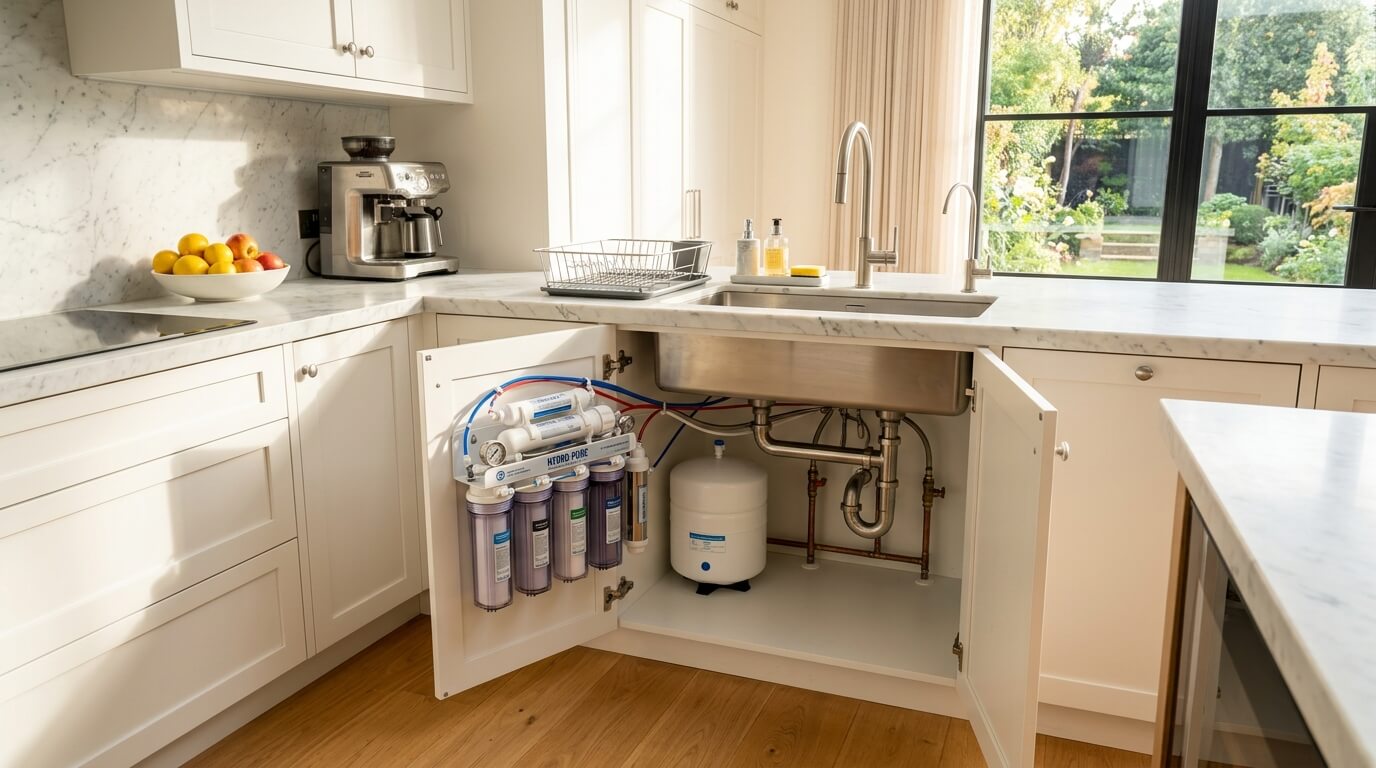
Why Do You Actually Need One?
Let's talk about city water. Sure, it is technically "safe" to drink according to municipal standards. But safe doesn't mean it tastes good. Water travels through miles of old, dirty subterranean pipes. It picks up rust, sediment, and weird heavy metals. Then treatment plants dump heavy amounts of chlorine in it to kill bacteria before it reaches your house.
That chemical mix seriously messes with your food. Boiling a pot of pasta? Those noodles act like sponges and soak up the chlorine. If you are baking something delicate—like the perfect Oreo cheesecake—bad water can totally alter the subtle flavors. The best under sink water filter strips away all that junk. You get a totally blank slate for cooking.
Also, let's not forget about kitchen workflow and water pressure. Cheap faucet attachments slow your water down to a sad trickle. Filling a big stockpot takes forever. An under-sink unit connects straight to the cold line, keeping your pressure strong and steady.
The Bottled Water Scam
A lot of people think buying cases of bottled water is the ultimate workaround. It isn't. Let's do the math really quickly. If your family goes through a single 24-pack of bottled water every week, you are spending hundreds of dollars a year. Over five years, that is a massive chunk of money just to stay hydrated.
Worse, lugging heavy plastic cases from the grocery store is exhausting. Then you have to find space in your pantry to store them. And finally, you have to deal with the mountain of empty plastic bottles in your recycling bin. Finding the best under sink water filter eliminates this entire chore. You pay upfront for the hardware, and suddenly you have unlimited, better-tasting water flowing directly into your glass for pennies per gallon.
How Do You Know What Is In Your Tap Water?
Before you buy anything, you should probably figure out what you are actually trying to filter out. Not all city water is the same. Some places have huge issues with lead. Other areas just have hard water that leaves white scale on your dishes.
You have two simple options here. First, every local water utility is required by law to provide an annual Consumer Confidence Report (CCR). You can usually find it online. It tells you exactly what chemicals are in the local supply. Second, you can buy a cheap home water testing kit online. You dip a test strip into a glass of your tap water, wait a minute, and compare the colors to a chart. It instantly reveals your pH level, hardness, chlorine, and lead levels. Once you know your enemy, picking the best under sink water filter becomes incredibly easy.
The Features That Actually Matter
Shopping for plumbing hardware is annoying. Brands use tons of fake science words to confuse you. You do not need a degree in chemistry. You just need to know three real things to find the best under sink water filter.
- Filtration Stages: Good units use multiple steps. First, a sediment filter blocks big stuff like sand and rust. This stops the expensive carbon filters from clogging up too fast. The more stages, the cleaner the water.
- Micron Ratings: This tells you what the filter can physically catch. A 0.5-micron rating is tiny. It traps heavy metals, cysts, and microplastics. Lower numbers mean cleaner water.
- NSF Certifications: Ignore the flashy marketing on the box. Look for official NSF Certifications. NSF 42 handles aesthetic issues like taste and smell. NSF 53 is the big one—it proves the unit actually removes dangerous health threats like lead and asbestos.
Carbon Filters vs. Reverse Osmosis
You will see these two terms everywhere. Carbon filters act like chemical magnets. As water passes through, the carbon grabs onto chlorine, bad tastes, and many heavy metals. They are fast, cheap to maintain, and usually all you need for standard city water.
Reverse Osmosis (RO) is the nuclear option. It forces water through a semi-permeable membrane that is so tight, practically nothing but pure H2O gets through. It removes up to 99% of everything, including fluoride and Total Dissolved Solids (TDS). If you have well water, or live in an area with notoriously bad contamination, RO is the only way to go. But remember, RO is slower and produces a small amount of wastewater during the process.
The Top Rated Filters for 2026
I skipped the weak filters that leak, and the overpriced ones that cost a fortune to maintain. These four systems absolutely dominate the market right now. Here are the best under sink water filter options depending on your specific kitchen setup and budget.
1. Aquasana AQ-5300+ Max Flow (The Three-Stage Beast)
The Aquasana Max Flow is a beast. If you want the best under sink water filter for heavy daily cooking and drinking, this is it. It uses a robust three-stage system to block 77 different contaminants, including lead, asbestos, and mercury. But the absolute coolest part? It selectively filters. It pulls out the dangerous stuff but leaves the healthy minerals like calcium and potassium in the water. That is why it tastes so crisp.
The flow rate is also fantastic (0.72 GPM). You won't be standing there for five minutes staring at a pot waiting for it to fill. Swapping the cartridges is super easy, too. Just twist the old one off and snap the new one on. No specialized tools or plumbing tape needed.
- The Good: Keeps healthy minerals intact. Officially blocks 77 contaminants. Fast water flow won't slow down your dinner prep.
- The Bad: It is pretty wide. Make sure you actually measure your cabinet space, especially if you have a large garbage disposal taking up room.

2. Waterdrop G3 Reverse Osmosis (The High-Tech Option)
Got really hard water or high TDS levels? A basic carbon filter won't work for you. You need Reverse Osmosis. The Waterdrop G3 is easily the smartest tankless RO system out there. It strips water down to its absolute purest molecular state.
Old school RO systems used massive, ugly pressurized tanks that ruined your storage space. This one uses a smart internal pump to filter the water instantly on demand. It even comes with a premium smart faucet featuring an LED ring. That light changes color to tell you exactly when to change the filter. Honestly, the main unit looks more like a high-end gaming PC than a piece of plumbing.
- The Good: Tankless design saves tons of room. Smart LED faucet eliminates guesswork. Makes the absolute purest water possible for specialty coffee and tea.
- The Bad: It requires a dedicated electrical outlet under your sink. It also creates a small amount of wastewater, which is totally normal for any RO system.
3. CuZn UC-200 Under Counter (The Lazy Person's Dream)
Not everyone wants to drill a permanent hole in their nice quartz countertop for a secondary drinking faucet. The CuZn UC-200 solves this beautifully. It is an inline filter. That means it connects straight to your main cold water line. Every single drop of cold water you use from your main tap gets filtered automatically.
The crazy part about this unit is how long it lasts. Most filters need a cartridge change every six months. The CuZn is designed to last for up to 50,000 gallons. That is basically five solid years for a normal family. You install it once with a wrench, and you totally forget it exists.
- The Good: Zero countertop drilling required. Incredible five-year lifespan. Filters all your sink's cold water effortlessly for washing veggies.
- The Bad: It won't lower Total Dissolved Solids (TDS). If your water is extremely hard, this filter will not soften it.
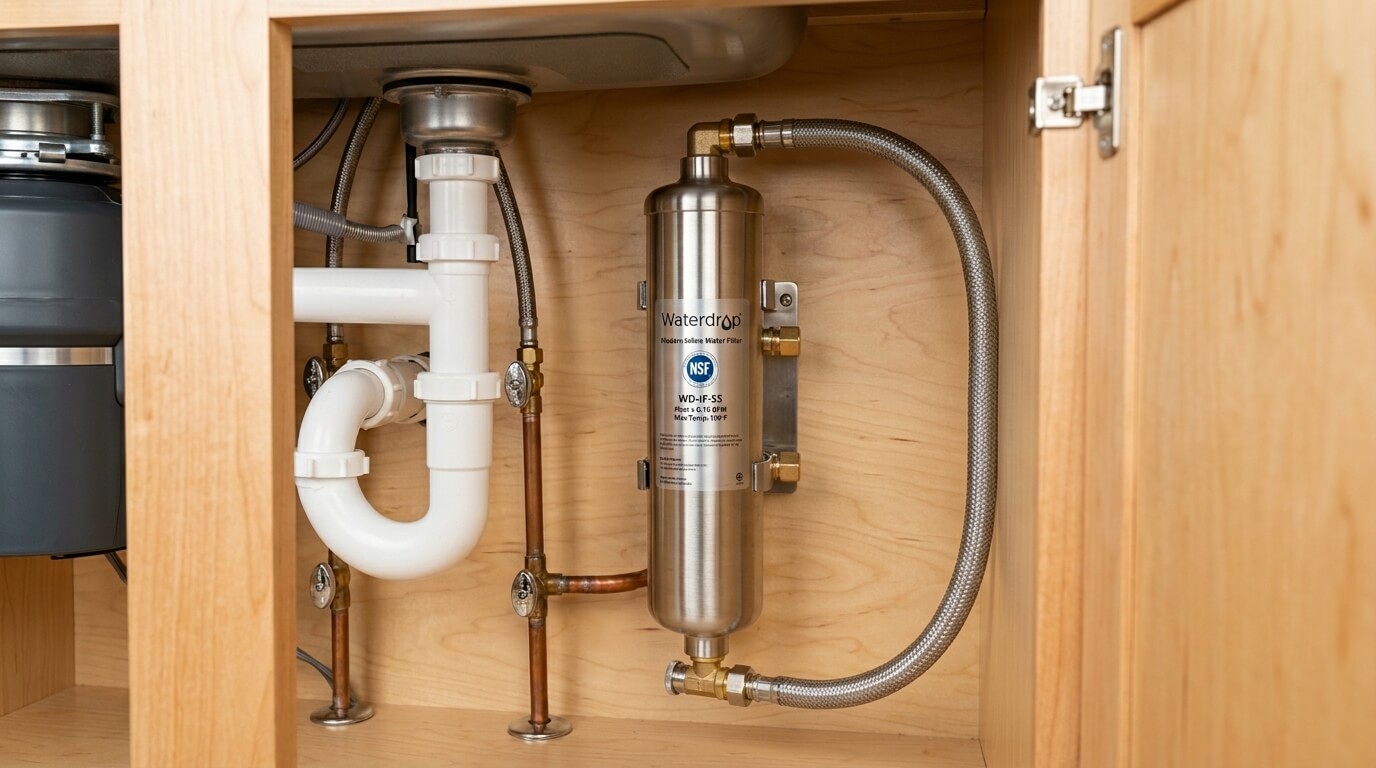
4. Frizzlife MK99 (The Best Budget Buy)
You do not need to spend hundreds of dollars to get clean water. The Frizzlife MK99 is hands-down the best under sink water filter if you are on a strict budget. Like the CuZn, it connects directly to your main faucet cold line. Installation takes maybe fifteen minutes if you know how to use an adjustable wrench.
It catches lead, chlorine, and bad odors easily with a 0.5-micron core. But here is the best part: it's incredibly eco-friendly. When it's time for a filter change, you only swap out the small inside core cartridge, not the whole bulky plastic housing. It saves you money on parts and heavily reduces plastic waste in landfills.
- The Good: Super cheap upfront cost. Eco-friendly filter swaps. Keeps your main faucet water pressure nice and high.
- The Bad: You have to change the core every 6 to 8 months, meaning slightly more frequent under-sink maintenance compared to larger units.
Is Installation Actually Hard?
Terrified of touching your plumbing? Don't be. Modern systems are basically adult Legos. They use modern push-to-connect hoses, color-coded tubing, and very clear visual manuals. If you own an adjustable wrench, some Teflon tape, and a flashlight, you can totally do this on a Saturday morning.
The only tricky part is if you buy a system with a separate drinking faucet. If you don't have a spare hole in your sink (like where a soap dispenser used to be), you have to drill one. Drilling through thin stainless steel is easy. Granite or quartz? That requires a special diamond-tipped hole saw. If you are scared of cracking your expensive counter, just pay a local plumber for an hour of their time. It is totally worth the peace of mind.
The Real Pros & Cons
Let's look at the brutal reality of keeping a filtration plant inside your kitchen cabinet. Nothing is perfect.
- Pro: Perfect, crisp drinking water instantly. Zero counter space wasted.
- Pro: Saves you a ton of money over buying plastic water bottles every week.
- Pro: Makes your morning coffee, loose leaf tea, and homemade soups taste noticeably cleaner.
- Con: Eats up vertical space under the sink. Say goodbye to some of your cleaning supply storage.
- Con: You actually have to remember to change the filters. Leaving an old filter in for too long breeds bacteria and ruins water pressure.
Frequently Asked Questions
Does an under sink filter reduce my water pressure?
Inline filters (that connect to your main faucet) usually cause a very slight, almost unnoticeable drop in pressure. However, dedicated systems with their own faucet operate independently, meaning your main kitchen tap retains its full original pressure.
Can I install a filter if I rent my apartment?
Yes, but you should stick to inline filters like the Frizzlife or CuZn. These connect to existing lines and require zero permanent drilling. When you move out, you simply detach the filter and reconnect the original hose. Never drill a hole in a rental countertop without written permission.
How often do I really need to change the cartridges?
Do not ignore the manufacturer guidelines. Most carbon filters require a swap every 6 months. If you notice the water pressure dropping suddenly, or the chlorine smell returns, that means the filter is completely clogged and needs replacing immediately.
Do water filters remove hard water scale?
Standard carbon filters do not remove the calcium and magnesium that cause hard water scale. If white crust around your faucet is driving you crazy, you will need to invest in a Reverse Osmosis system or a dedicated whole-house water softener.
Should You Buy One?
If you are a passionate home cook, the answer is an absolute yes. Families and coffee snobs love these systems. If your city water smells like chlorine, or if you live in an older neighborhood with aging pipes, this is a must-buy upgrade. It hides perfectly out of sight while doing heavy lifting.
But, if your landlord is incredibly strict about plumbing modifications, or if your fridge already dispenses premium filtered water that meets your daily needs, you probably don't need a second dedicated system under the sink.
Final Thoughts
Water is literally the most used ingredient in your entire kitchen. We obsess over buying incredibly sharp Japanese knives and heavy cast iron pans, but we cook with chemical-filled municipal water. It simply makes no sense when you think about it.
Installing the best under sink water filter fixes the very foundation of your daily cooking. Sure, you lose a little cabinet space. Yes, you have to buy replacement cartridges a couple of times a year. But the very first time you fill a glass and taste absolutely nothing but crisp, perfectly clean water straight from the tap? You will realize it is the smartest kitchen hardware upgrade you have ever made.